

Need a Quiet Coffee Grinder? Start With Your Apartment, Not the Decibel Claim
Short answer: If you grind coffee at 5:30 a.m. in an apartment, look for a grinder with a less irritating sound, a short grinding cycle, and minimal vibration through the counter. A lower advertised decibel number alone won't tell you whether it will wake someone. The beans, the room, the counter, and even the dosing cup can change what you hear.
Here's the awkward part: no electric burr grinder is silent while crushing coffee. A model that sounds like a soft hum with no beans can become noticeably louder under load. So before spending money, figure out which noise is actually bothering you: the motor, the burrs chewing through beans, a high-pitched whine, or the whole counter buzzing.
What makes a grinder annoying at 6 a.m.?
Think of four separate problems. Loudness is the overall level. Pitch is whether it sounds like a low rumble or a sharp whine. Duration is how long the noise lasts. Vibration is what gets transmitted into cabinets, cups, and shared walls. Two grinders can measure similarly at one spot yet feel completely different from the next room.
That's why the useful question isn't just "How many dB?" It's "How does this grinder sound while grinding my usual dose, on a counter like mine?" A short video recorded at a fixed distance with beans in the grinder tells you more than an unloaded motor demo, though phone microphones are not calibrated measurement tools.
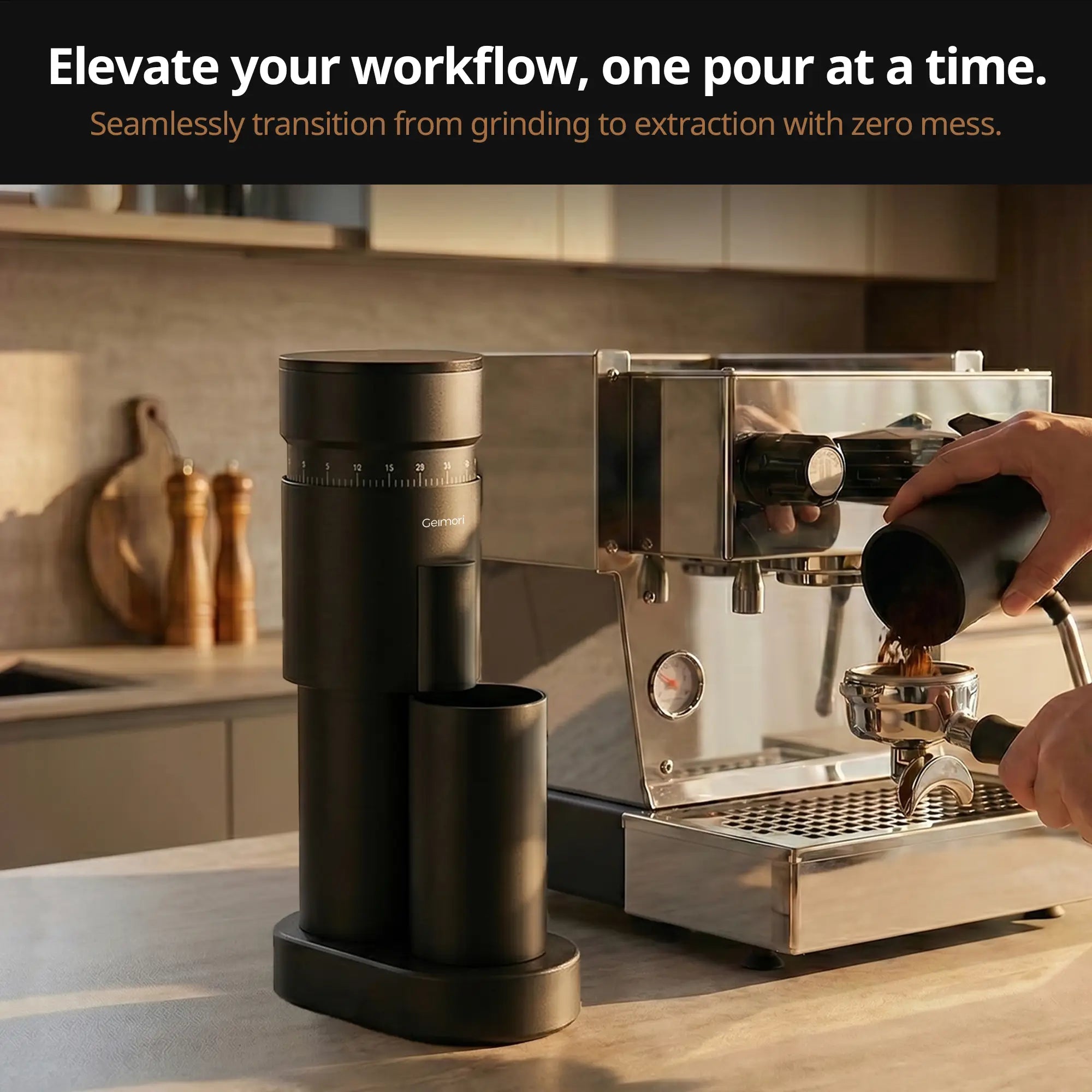
Quiet enough for an apartment: a better shopping checklist
| Check | Why it matters | What to ask or watch |
|---|---|---|
| Sound under load | Beans change the sound | Request a full-dose recording, not just idle noise |
| Pitch | A high whine may feel more intrusive | Listen for sharp tones as well as total volume |
| Grinding time | Shorter disturbance may be easier to live with | Time a realistic dose at your grind setting |
| Counter vibration | Cabinets and cups can amplify rattling | Check whether the grinder rocks or rattles on a solid surface |
| Workflow noise | Knocking, tapping and brushing count too | Watch a full start-to-finish routine |
Don't assume that a bigger burr, slower RPM, or a heavier housing automatically means quieter. RPM affects how a grinder works, but it's not a universal noise ranking. We explain that distinction in our low-speed versus high-speed grinder guide.
Three setups, three different answers
1. You make one pour-over before everyone wakes up
A good hand grinder is worth considering if you can comfortably use one. It removes the electric motor, though the beans and hand-grinding action still make some sound. If hand grinding hurts your wrist or simply ruins the routine, don't force it. An electric grinder with a tolerable sound and a shorter cycle may be the more practical answer. See our hand grinder versus electric grinder guide for the convenience tradeoff.
2. You pull espresso every morning
Espresso often requires a finer setting and more dialing in. Check noise during an actual espresso dose, not a coarser filter demo. Also consider how often you will purge, adjust, and repeat. A quiet first dose doesn't help much if dialing in means running five more doses while your partner is asleep.
3. You make two or three drinks back-to-back
Pay attention to total time and workflow. A grinder that finishes each dose quickly might create less overall disturbance than a softer-sounding one that runs much longer. And a dosing cup clattering on a metal tray may be the loudest part of the routine.
Find a Grinder for Your Routine
Can you make the grinder you already own quieter?
Try the cheap fixes before replacing a machine that makes coffee you like.
- Move it away from walls and corners. Hard surfaces reflect sound, and cabinets can resonate.
- Use a stable, level counter. A wobbling tray or loose cup can add a surprising amount of rattling.
- Check removable parts. Make sure the lid, catch cup and hopper (if present) are seated correctly.
- Clean it according to the manual. Built-up grounds can change the workflow; don't assume every new noise means something is broken. Our grinder cleaning guide covers routine maintenance.
- Prep the night before when needed. For an occasional very early start, grinding ahead and storing grounds in a closed container may be a reasonable compromise. Freshness matters, but so does sleep.
A thin, stable mat may reduce some vibration on certain counters, but don't block vents, obstruct cooling, or use an unstable foam pad. Don't build a soundproof box around an operating grinder.
Where Geimori fits - and where it doesn't
The Geimori GU63 is a 63mm conical, low-speed single-dose grinder that Geimori positions for a calmer daily workflow. It may be worth a look if you want an electric grinder for espresso and filter without a hopper full of beans. But a quiet product description is not proof that it will be quieter than your current grinder in your kitchen. Ask for comparable loaded recordings and check current stock before deciding.
The compact GU38 may suit someone with limited counter space; its size alone does not establish a noise advantage. The GU64 Gen2 offers a different flat-burr workflow and variable speed, but variable speed should not be treated as a guaranteed silent mode. If you switch beans often, our single-dose grinder explainer helps you decide whether the workflow itself fits.
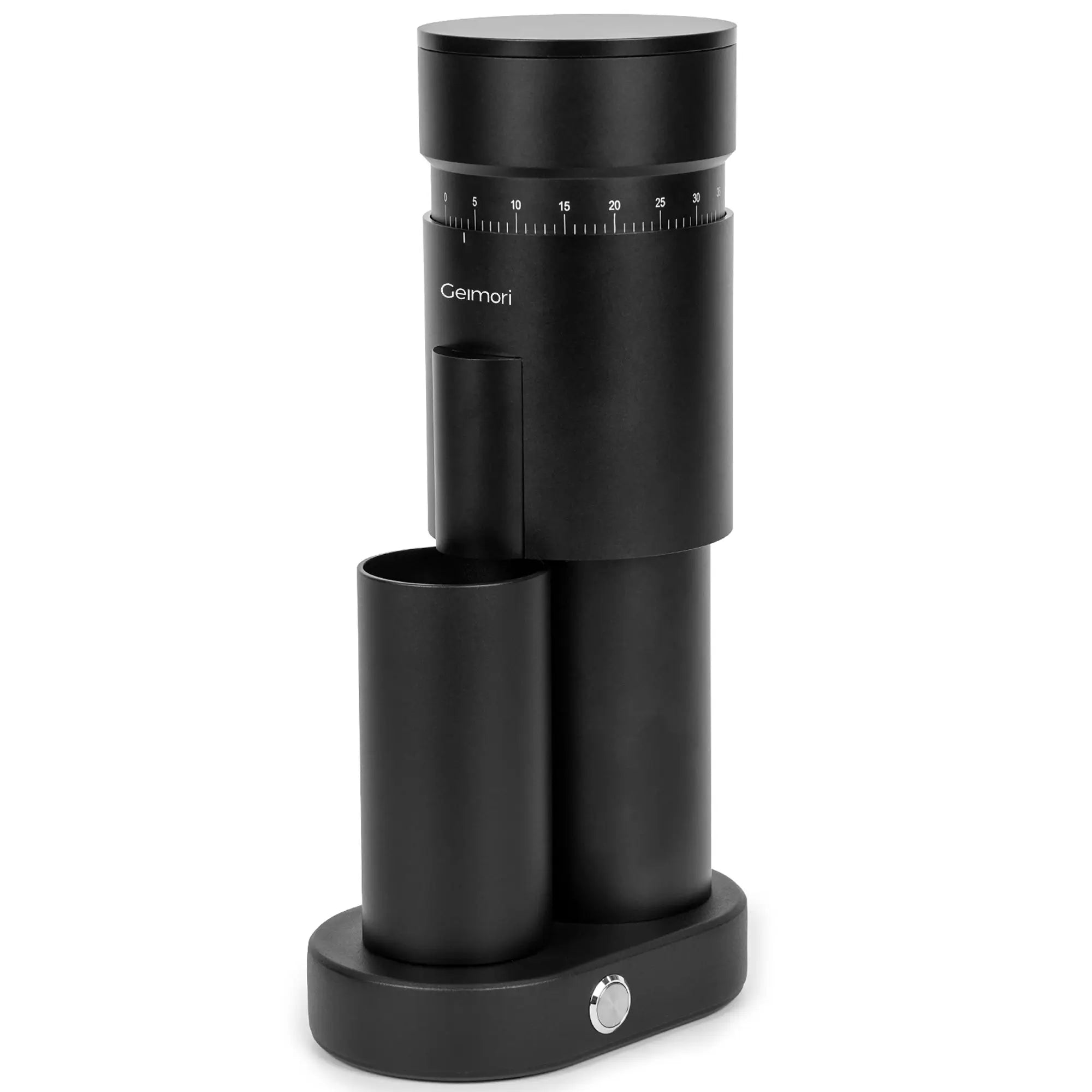
Check GU63 Details & AvailabilityCompare Geimori Grinders
How to compare noise fairly at home
If you have access to two grinders, keep the bean, dose, grind target, counter location, microphone position and room conditions the same. Record the entire dose, not only the quietest few seconds. Listen from the bedroom or hallway too. A phone app can help compare repeat runs on the same device, but it is not a certified sound-level meter. Avoid publishing absolute decibel claims from an uncalibrated phone.
Also listen for the sounds after grinding: tapping the chute, knocking out retained grounds, and setting the metal cup down. A simpler routine can be more neighbor-friendly than a supposedly quiet grinder with a lot of noisy cleanup.
FAQ
Are conical burr grinders quieter than flat burr grinders?
Not as a rule. Burr shape by itself doesn't determine the sound you hear. Motor design, housing, speed, beans, dose, and the counter all matter.
Does lower RPM mean less noise?
Sometimes it changes the sound, but not predictably across different machines. A lower-pitched sound can be more comfortable without necessarily having a lower measured level.
Is a hand grinder completely silent?
No. It's motor-free, not sound-free, and grinding fine espresso can take effort. If hand strength is an issue, an electric option may be worth the tradeoff.
Can I grind the night before?
Yes, if the alternative is waking someone. Coffee begins losing aroma after grinding, so store it closed and use it promptly. This is a convenience compromise, not a freshness upgrade.
Which Geimori grinder has the lowest decibel rating?
We don't have a verified, standardized cross-model noise comparison to cite. Don't buy based on an unverified ranking. Ask for a loaded demonstration in conditions close to yours.
One last thing: the quietest grinder isn't always the right grinder
Think about what you'll drink, how often you'll grind, and how much noise your household can tolerate. If a quieter machine makes mornings easier, that's a real upgrade. If your current grinder is already fine, a rubber mat and a better spot on the counter might be enough. Either way, don't pay for a "silent" label without hearing the grinder work.
Compare Grinders by Brewing Style
Editorial note: Written by Geimori, a coffee-grinder brand. We have not performed an independent, standardized acoustic comparison of the models discussed. Community discussions informed the questions in this guide, not numerical product claims.


